

A radar, not a camera
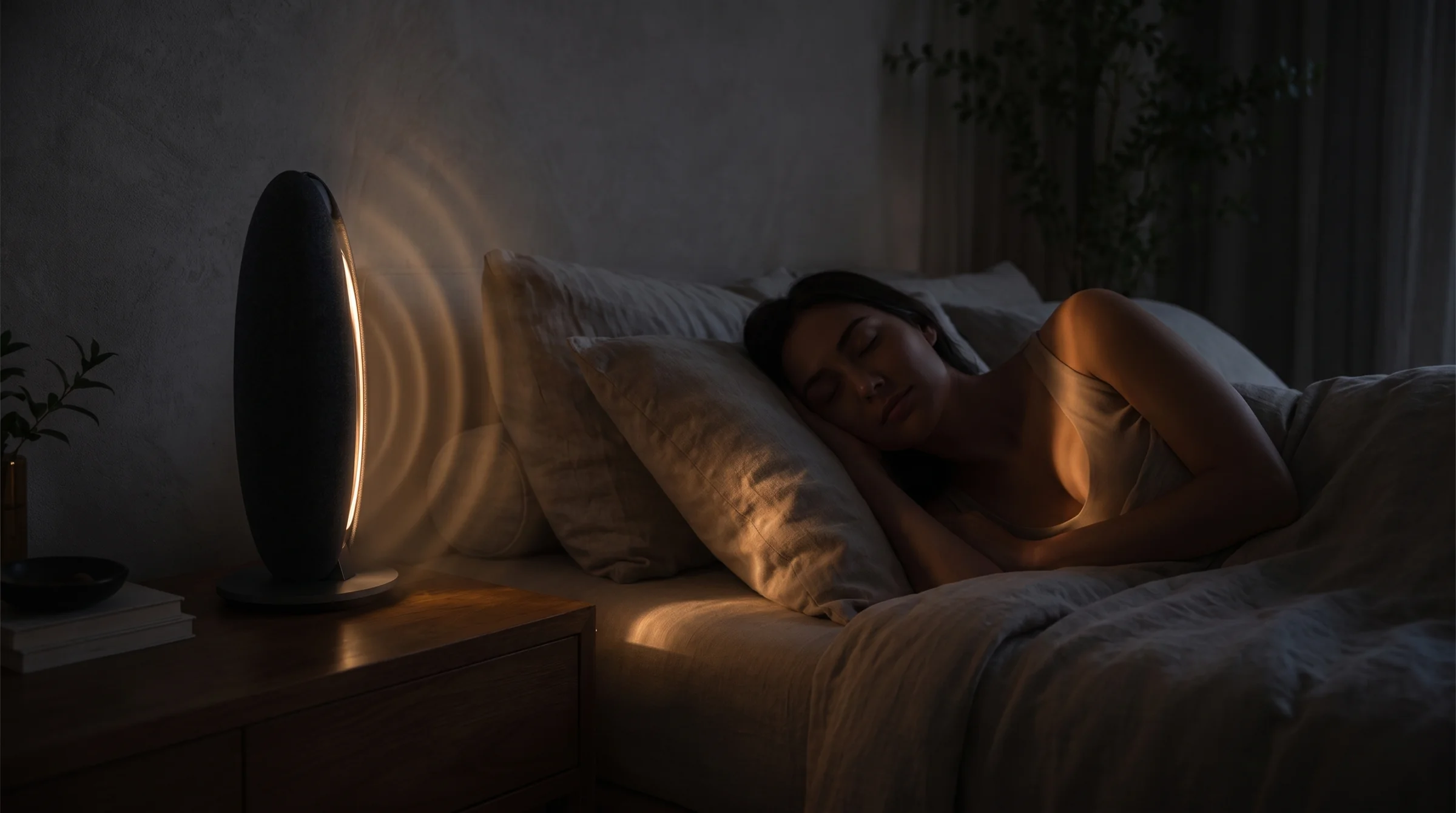
From the nightstand, a low-power radar notices presence, movement and the motion of breathing—through bedding, in complete darkness, with nothing worn. How the radar works ↓
From the nightstand, LunaWake reads your night—no camera, nothing to wear, nothing touching you. And its reading is being tested against polysomnography, the reference hospital sleep labs trust.
A signal is not a sleep state. LunaWake senses first, understands second, and only then responds—so a noisy signal never turns into a made-up sleep state.
From the nightstand, a low-power radar notices presence, movement and the motion of breathing—through bedding, in complete darkness, with nothing worn. How the radar works ↓
LunaWake is built to estimate when you are asleep, awake, or somewhere in between—in the same 30-second epochs sleep labs score. When the signal is unclear, it says so instead of guessing.
Light, sound and a gentle wake, chosen for the moment—and often the best response is none at all. Your choice always wins.
Polysomnography—PSG—is how sleep medicine scores a night: brain waves, eye movement, heart rhythm, airflow and breathing effort, read epoch by epoch by trained technicians. It is the reference any serious sleep technology has to face.
Healthy adults slept at a university sleep laboratory; sleepers with disturbed breathing joined at a partner hospital’s sleep-medicine center. Each night was recorded two ways at once—full PSG on the body, LunaWake on the nightstand—and scored by technicians under AASM rules, the scoring manual of the American Academy of Sleep Medicine. The study is ongoing, and the count keeps growing. Results are shared here as they are finalized.
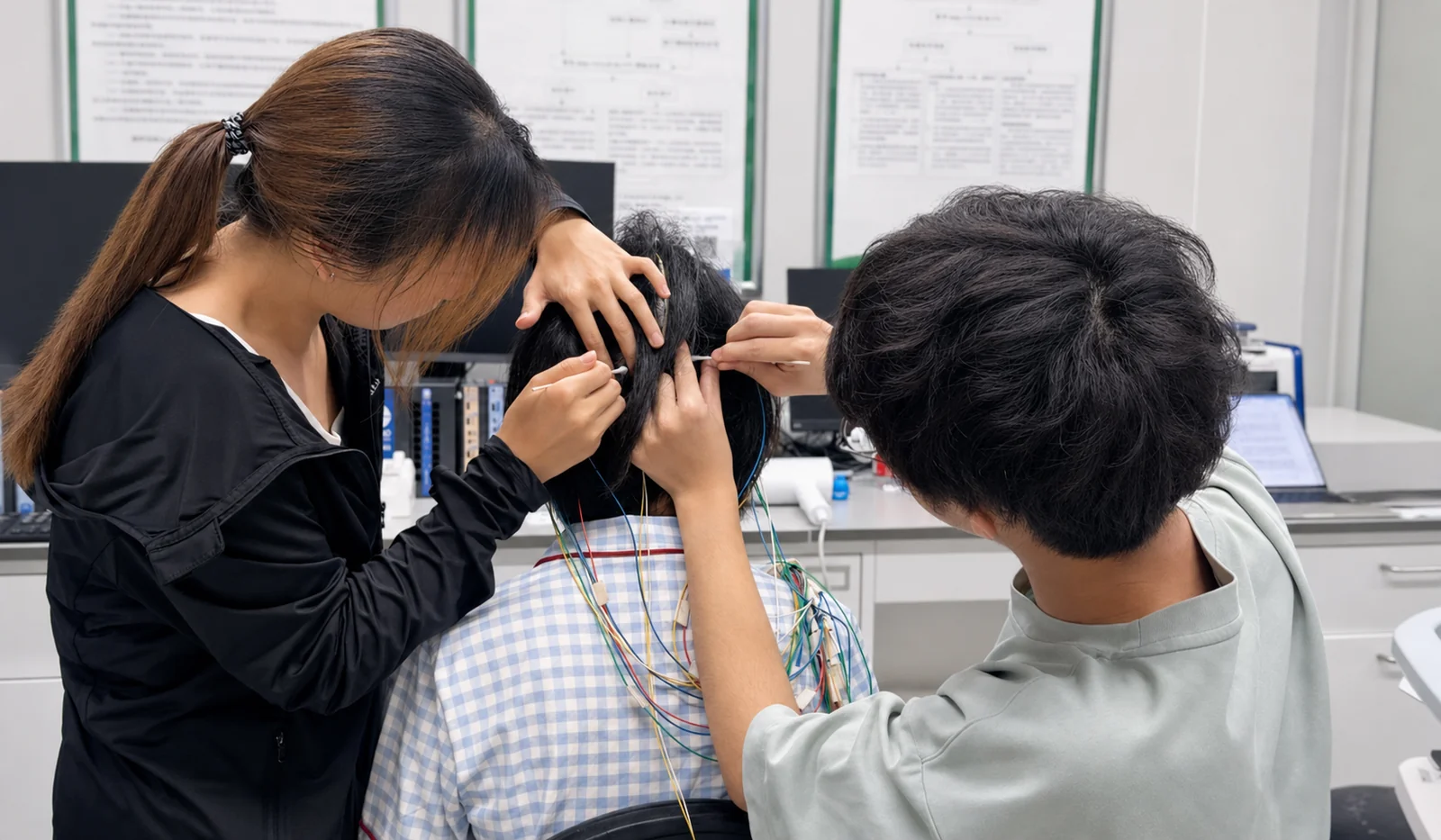
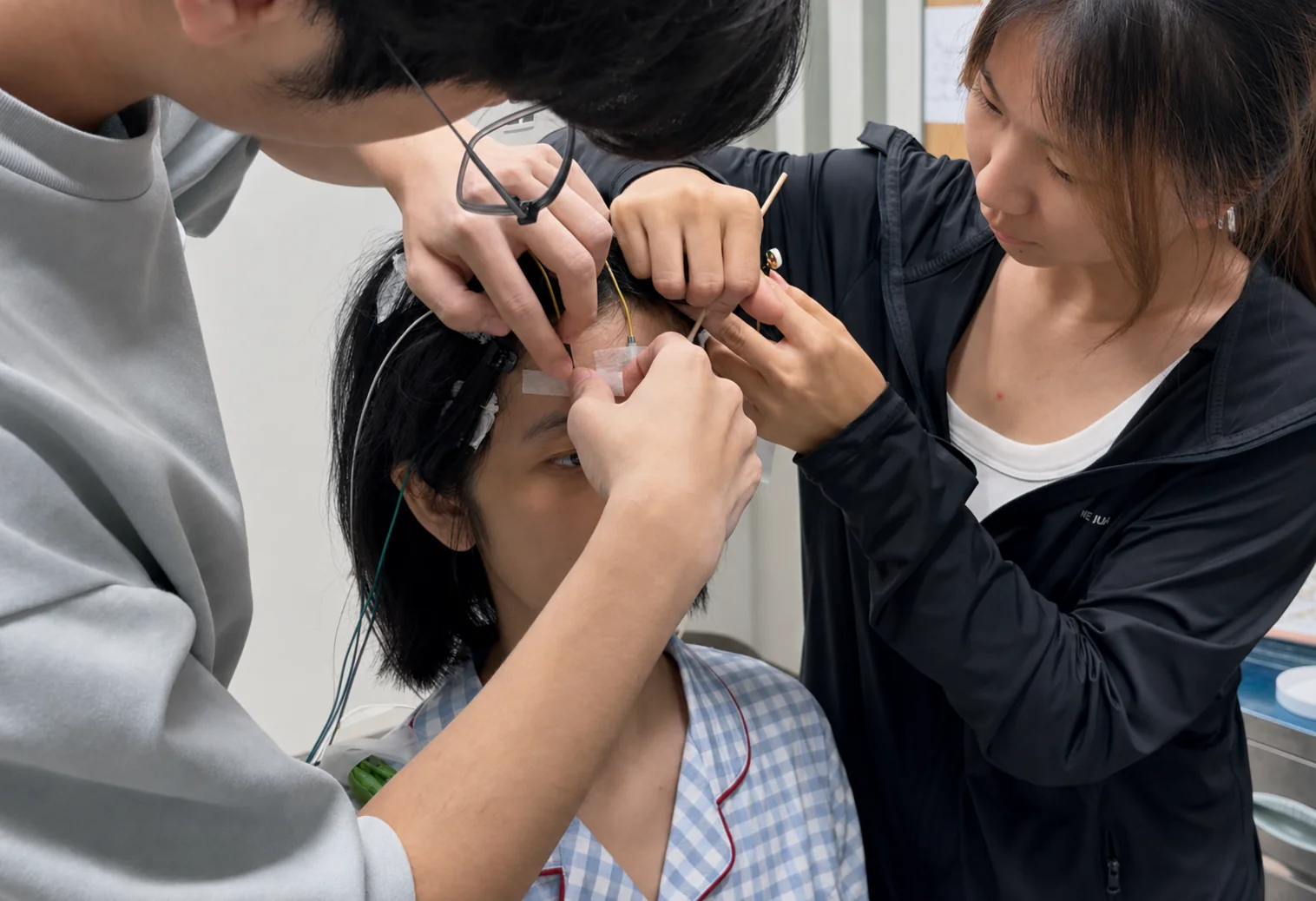
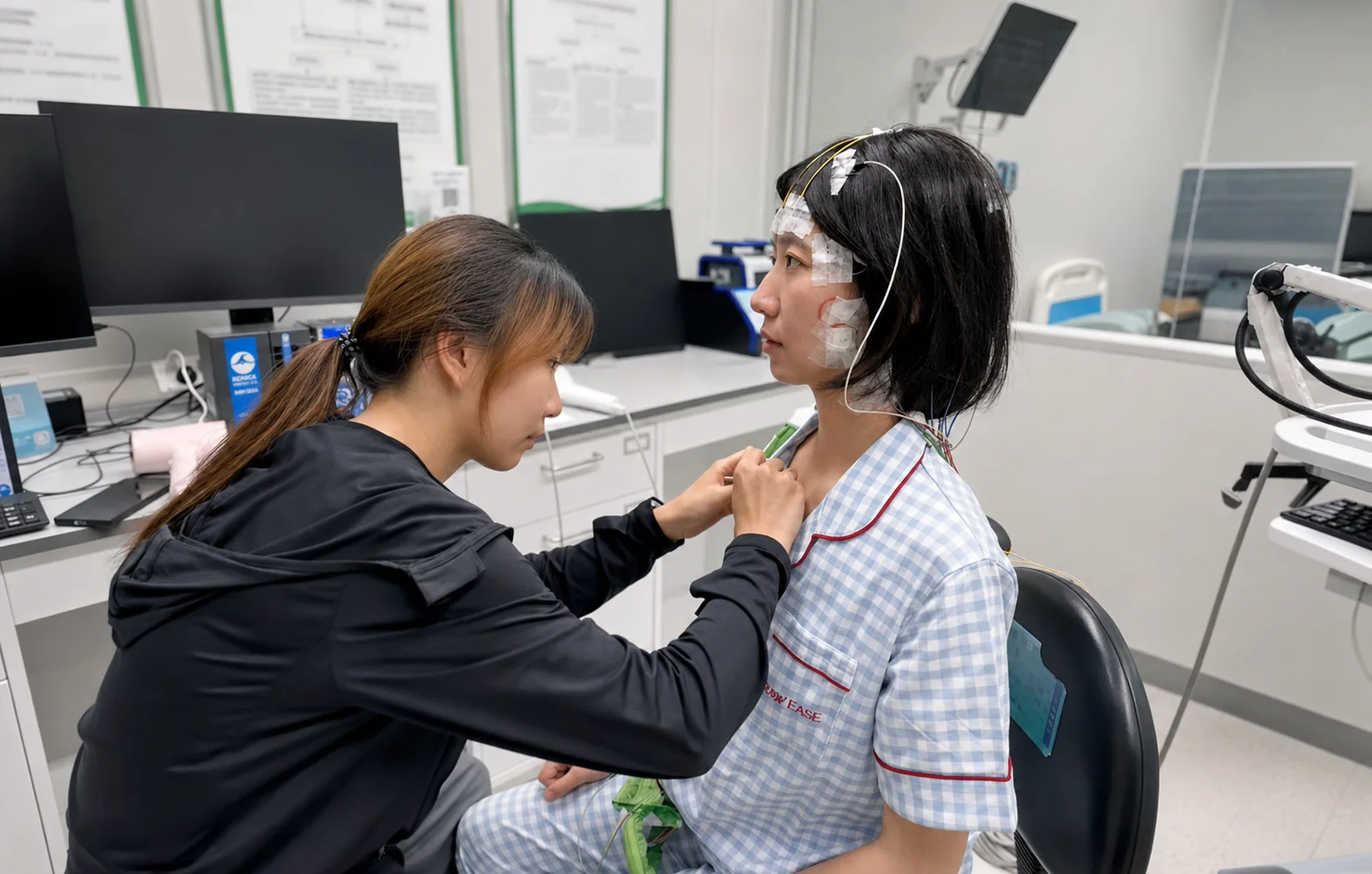
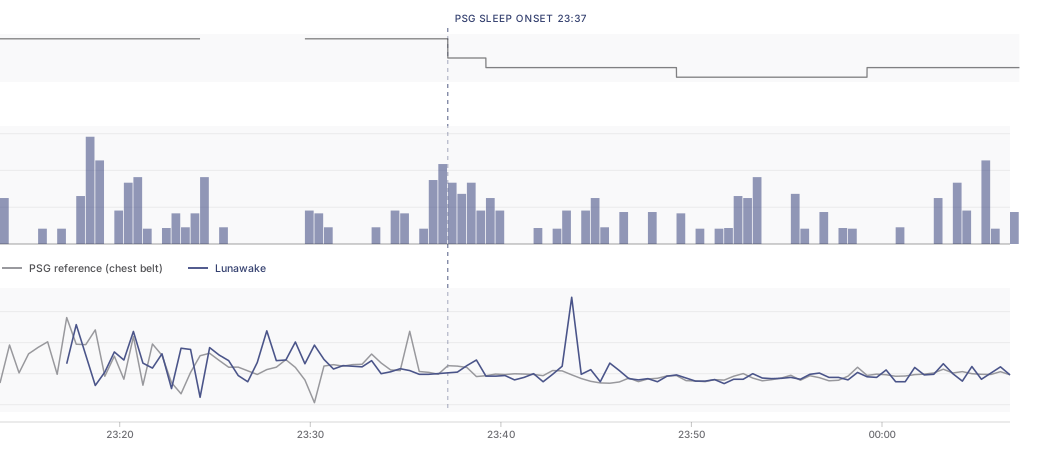
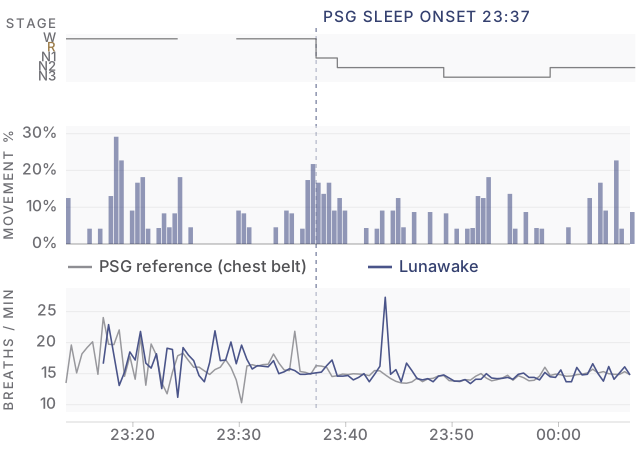
Statistics summarize; a night shows. Three windows from an early two-night feasibility session with one sleeper, recorded before the larger study above—LunaWake’s bedside reading against the lab’s own instruments. These are the breathing and movement signals the estimate reads from; they show the raw material, not a result.
Respiration and movement are shown for 30 minutes on either side of the PSG-scored event.
At 23:37, by the lab’s scoring—and the bedside reading shifted at the same minute. As this sleeper drifted off, breathing settled into a calmer, more even rhythm, and the two lines pulled to within one breath per minute.
Average difference (MAE) 2.5 → 0.8 breaths/min (≈3× closer) across PSG-scored sleep onset · 1 participant.

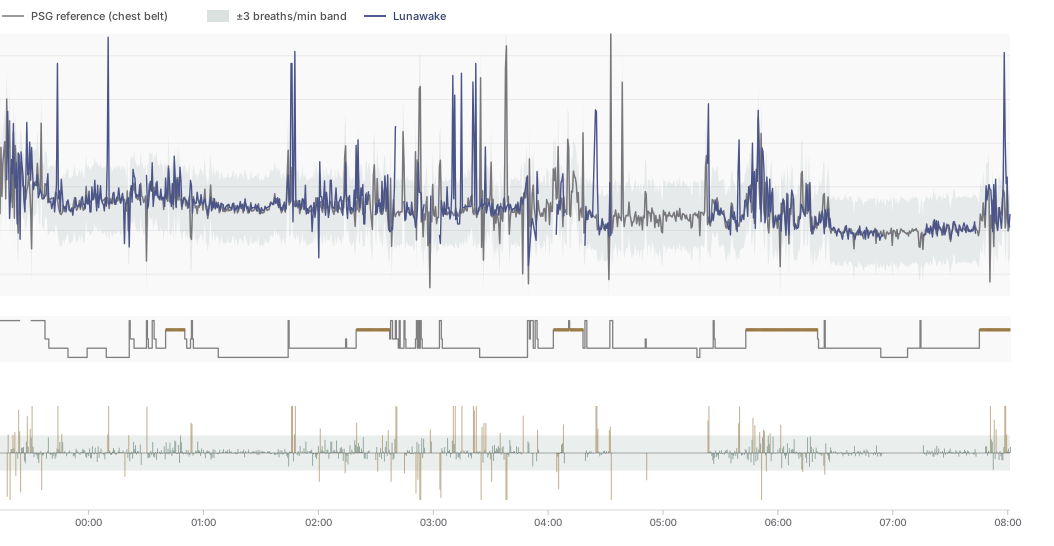
One full night—LunaWake’s contactless reading, side by side with the PSG chest belt.
of the night, the bedside reading stayed within three breaths a minute of the belt the lab straps to the sleeper’s chest—usually within a single breath. Close enough, on this night, to follow the sleeper’s breathing rhythm—with nothing touching them.
1 participant · night A shown · exploratory comparison
For the technically minded: average difference (MAE) 1.1 breaths/min · average bias +0.4 · ≈ 6 hours of compared sleep · single occupant, bedside range · pre-production algorithm.

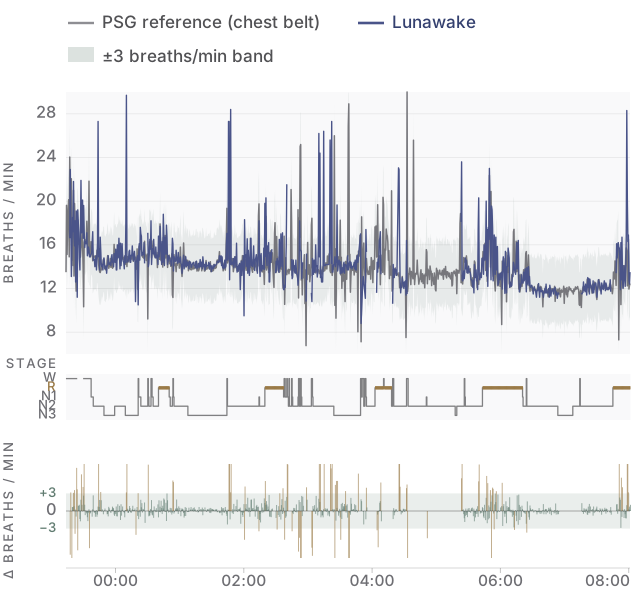
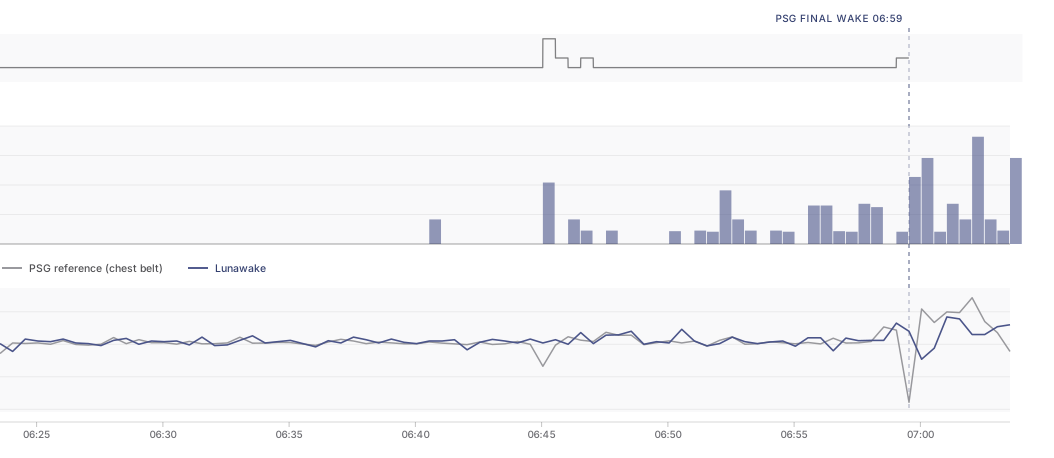
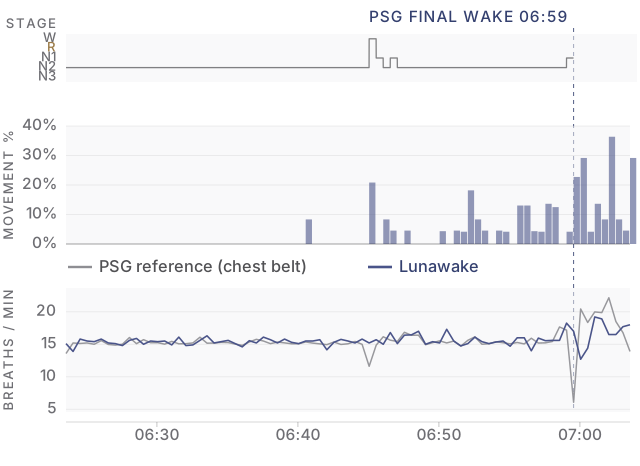
Movement is shown through the PSG-scored awakening and out-of-bed event.
At 06:59, by the lab’s scoring. On this night, waking ended the stillness of sleep—and the bedside signal changed at the same minute.
Movement index 2.3 → 17.4 (0–100 scale, 7.6×) after the PSG-scored final wake · 1 participant.

The sleep-estimation approach builds on 500+ PSG-annotated nights from our partner laboratory’s prior sleep-sensing research.
Adapted to contactless radar with hundreds of LunaWake’s own overnight recordings from real bedrooms.
Then held to nearly a hundred PSG-scored lab nights—healthy sleepers and clinic patients alike, with more still being recorded.
Breathing moves the body by millimeters. A 60 GHz radar can measure that from the nightstand—here is how it works, and what it can and cannot see.
The radar sends out a faint radio signal and reads its reflection off the surface of the body. Breathing and movement shift that reflection by millimeters, and the radar measures the shift—through bedding, in complete darkness.
Its reach ends at the bedside: within 2.4 meters, about eight feet. There is no lens and no image. It cannot see a face or a room; it can only sense motion.
The radar produces motion readings, not pictures. There is nothing to watch and nothing to leak from a lens, because there is no lens. Its microphones are used only for passive acoustic sensing, not voice commands or conversation, and the physical privacy switch cuts off acoustic sensing at the hardware level. What LunaWake records, and how it is stored, is described in our Privacy Policy.
Warm light and sound help you settle. As the night deepens, the room goes quiet, then brings you back gently when morning comes. You stay in control.
Warm light. Slower sound. One guide, if you want it.
As you settle, the room fades with you.
No prompts. No content. Just quiet sensing.
Light first. Sound only if needed.
One useful insight—not another dashboard.
The evidence informs how the room uses light, sound and routine; it does not make an automated bedroom equivalent to clinical care.
Guidance is informed by circadian light, paced-breathing and music research.
Chang 2015 · Brown 2022 · CIE S 026:2018 · Laborde 2022 · Jespersen 2022
Selected principles from CBT-I—cognitive behavioral therapy for insomnia—inform how the room supports your rhythm: a consistent wake anchor, clearer bed-and-sleep cues and gradual adjustments. LunaWake does not deliver CBT-I and is not a treatment for insomnia.
Qaseem 2016 · Edinger 2021 · Riemann 2023 · Espie 2012
Dawn-simulation and sleep-inertia research inform the sequence.
Trotti 2017 · Gabel 2013 · Thompson 2014 · McFarlane 2020
LunaWake tells you what it knows and how it knows it—and when it doesn’t know, it says so. That rule shaped the study, and it shapes every night at home.
Sensing and sleep estimates evaluated against technician-scored PSG across nearly a hundred lab nights—healthy adults at a university sleep laboratory and patients at a hospital sleep-medicine center. Results are shared here as they are finalized.
When the signal is weak, your record shows a gap instead of a guess—and the room stays quiet rather than act on a weak read. Sleep estimates are wellness insights, not diagnosis.
More sleepers, more homes, more positions. Shared here as results come.
Join for product updates, early access and launch pricing when LunaWake becomes available.
Get early access and launch pricing ↗